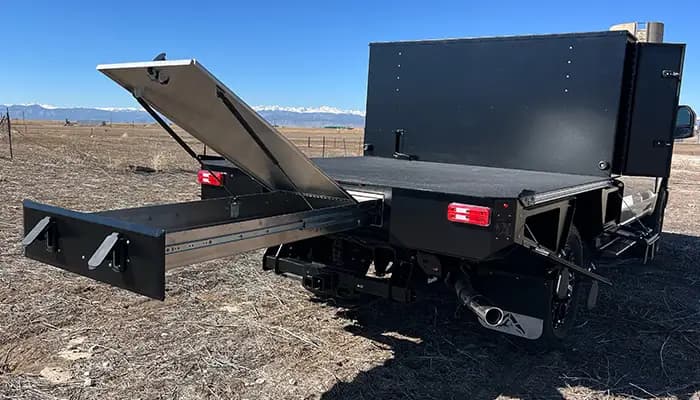
Flatbed
Information
Running a flatbed with an OEV camper isn't complicated: but it does require getting the details right. This page covers everything: why flatbeds, which tray fits which truck, weight distribution, and the safety considerations that matter most.
Built for the job. Not adapted to it.
A factory truck bed is designed to haul general cargo. A purpose-built flatbed is designed specifically for the weight, footprint, and tie-down requirements of a truck camper. For serious builds, the difference matters.
Designed for the load
A purpose-built flatbed is engineered to the weight and footprint of a specific camper. Factory truck beds are not. The result is a more predictable, safer platform for heavy camper builds.
Lower center of gravity
The Aluma Tray sits lower than a standard truck bed. A lower mounting surface means a lower overall center of gravity: critical when you're carrying 1,000+ lbs above the frame rail.
Proper tie-down points
Every Aluma Tray is built with Torklift Derringer-compatible anchor points: correctly positioned for OEV campers. No improvised mounting, no compromised structure.
All-aluminum construction
Aluminum means corrosion-resistant, lightweight, and strong. The Aluma Tray is designed and built by Lite Industries: the same engineering that goes into serious work trucks.
Important: Weight Distribution and Chassis Loading
Installing an 8-foot flatbed on a truck with a 6.5-foot factory bed extends the load rearward. When the center of gravity approaches or moves behind the rear axle, it unloads the front axle: reducing steering authority and increasing braking distances. The frame also experiences tension forces rather than compression, which it was not designed for.
There is no way to ensure correct chassis loading in that application without a formal weight and balance study conducted by an FMVSS/CMVSS/NHTSA-approved upfitter. If you are spec'ing a flatbed that extends significantly beyond your truck's factory bed length, this study is required: not optional. Contact your OEV dealer before finalizing your build.
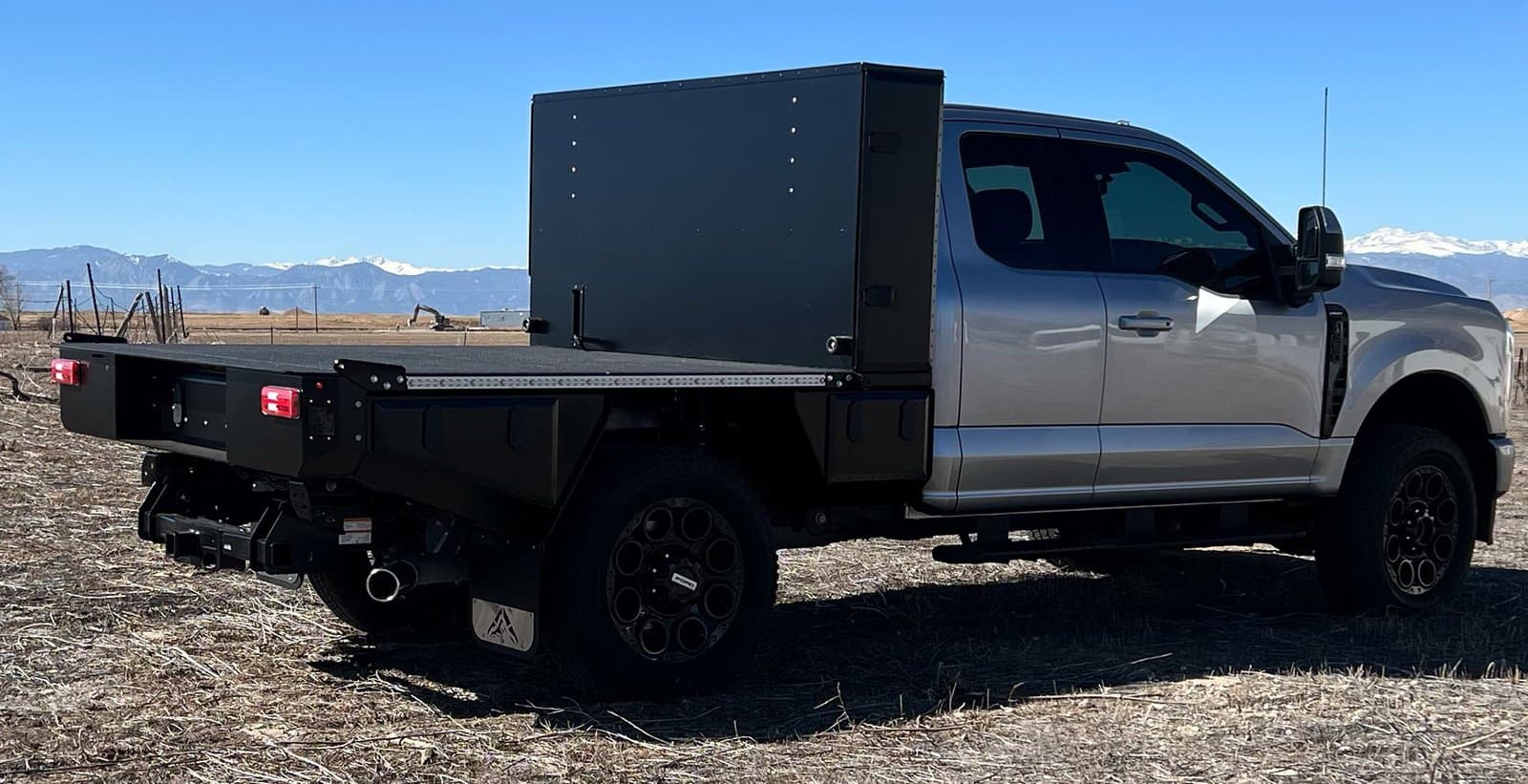
Aluma Tray 6.75’
The go-to platform for 3/4-ton short-box trucks
Purpose-built for 3/4-ton short-box pickups. Pairs with the Hudson Bay 6.75’ and Back Country 6.85’: the most popular combination in the OEV lineup. Lower ride height keeps your center of gravity where it belongs.
- Dry weight
- < 700 lbs
- Max load
- 3,000 lbs
- Pairs with
- Hudson Bay 6.75’, Back Country 6.85’
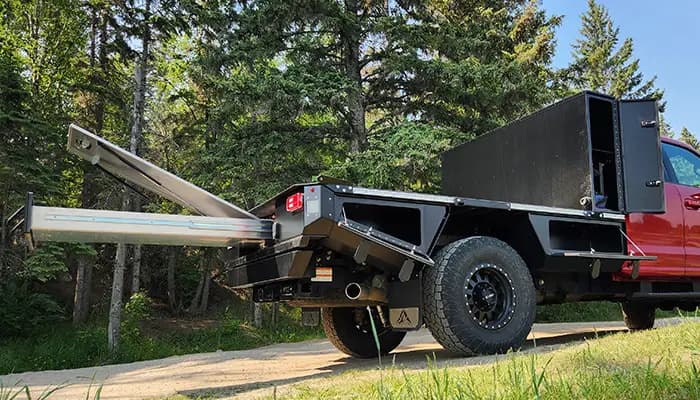
Aluma Tray 8’
Built for 1-ton long-box trucks and bigger trips
Designed for 1-ton long-box pickups and the most capable expedition setups. Pairs with the Hudson Bay 6.75’ (with a front storage box), Hudson Bay 8’, and Back Country with optional side boxes. More length, more tie-down options, more flexibility.
- Dry weight
- < 800 lbs
- Max load
- 3,000 lbs
- Pairs with
- Hudson Bay 6.75’, Hudson Bay 8’, Back Country (w/ side boxes)
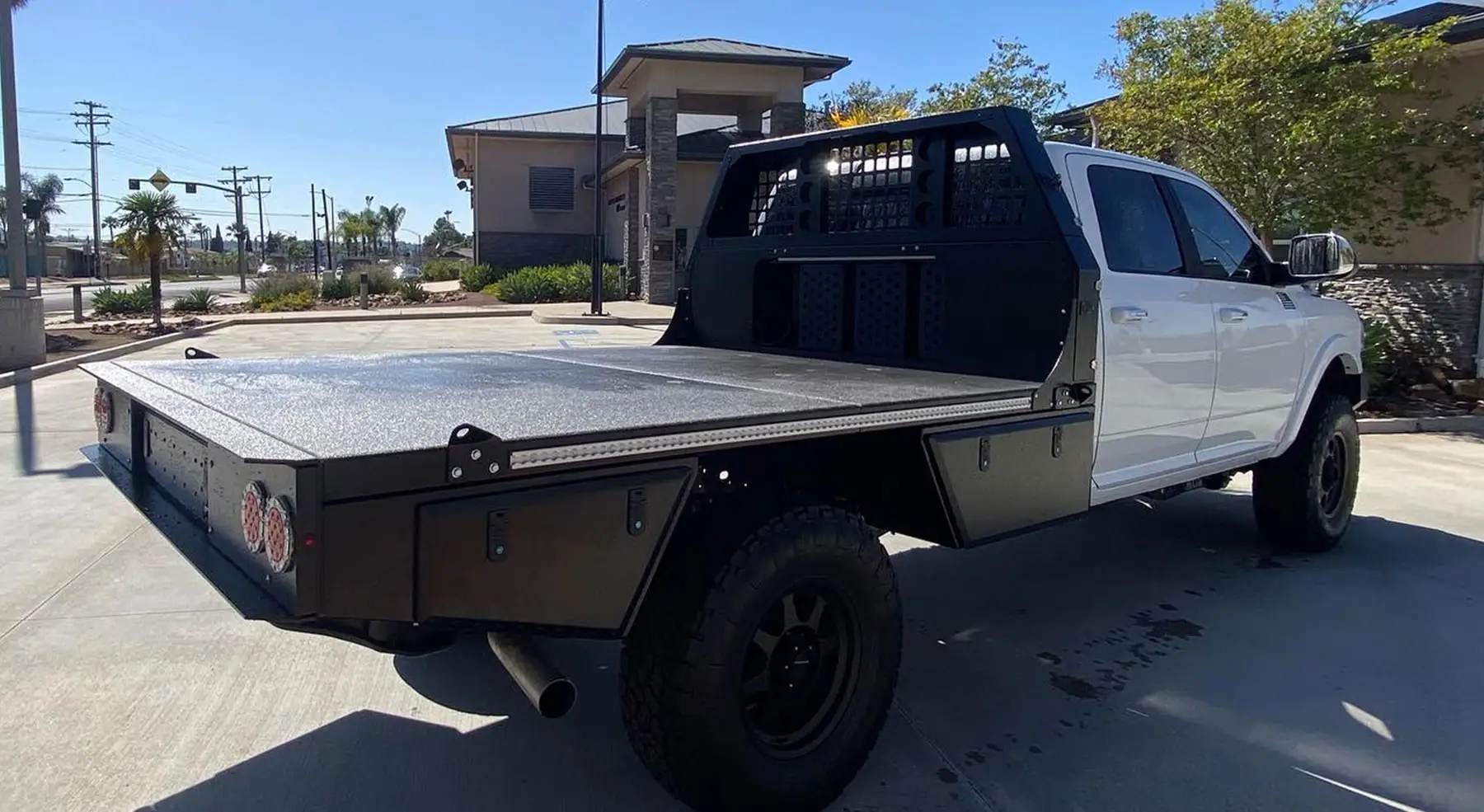
Aluma Tray 9’ HD
Maximum bed area for the most demanding builds
The flagship of the Aluma Tray lineup. Heavy-gauge construction, a 9-foot bed area, and the same all-aluminum DNA as every Aluma Tray. Built for heavy-duty trucks and the most ambitious expedition rigs.
- Dry weight
- < 855 lbs
- Max load
- 5,000 lbs
- Pairs with
- High Country 9.5’, Summit
Flatbed FAQs
Still have questions? Talk to a dealer or book a consultation. We'll walk you through the right setup for your truck and use case.